Table of Content
You’ll generally need a credit score of at least 680 to refinance a home equity loan. Typically, the higher your score, the better the rates you’ll qualify for, though. You can compare mortgage refinance rates all in one place with Credible.
If your home has lost value over the last few years, you may not get approved for this refinance option. You can check with your lender for other qualification guidelines. For example, many require you to have at least 20% equity in your home before you can refinance. Each week, you'll get a crash course on the biggest issues to make your next financial decision the right one. “This can be valuable for first-time homeowners to finance renovations, or older homeowners to secure their golden years,” says Chris Maloof, president, Go-To Market at MeridianLink.
Personal Loan
If you value your time, you might want to think about that, too. Meet with a local investment and retirement services team member who can help you plan for a better tomorrow. Press escape to close or press tab to navigate to available options. Lenders want to review your employment history, along with current pay stubs and verification of your position.
A personal loan can be used for just about anything, including paying off your HELOC. You can close out your HELOC with a Discover© personal loan so that you can secure a fixed rate and don’t have to deal with fluctuating interest rates. Bankrate is compensated in exchange for featured placement of sponsored products and services, or your clicking on links posted on this website. This compensation may impact how, where and in what order products appear.
Why should I consider HELOC refinancing?
These include attorney fees, a title search, and document preparation. Before you commit yourself to refinancing, check to see whether your current home equity loan imposes a penalty for paying it back early. You are likely to face closing costs and other fees, just as you did with the earlier loan. For that reason, it’s important to consider how much you’ll save by refinancing vs. how much you'll have to pay up front to do so.
Similar to applying for a mortgage, you will be required to provide all necessary documents in order to qualify for a home equity loan. You are also responsible for all closing costs, though you may have the option to roll some costs into your loan amount. Rather than providing a single, one-time lump sum at a fixed interest rate, a home equity line of credit gives you an ongoing, variable interest rate line of credit secured by your home equity.
How to Refinance a Home Equity Loan
A home equity loan is a consumer loan allowing homeowners to borrow against the equity in their home. In any case, the rate will depend on your combined loan-to-value ratio and your creditworthiness. The less equity you borrow against, the lower your interest rate will be.
In most counties and parishes in the U.S., the traditional mortgage cap is about $647,200, so anything larger is a jumbo loan. Limits rise in places where home values are higher and can reach as much as $970,800. Each lender will have their own requirements for this type of loan, so there’s no uniform rate, APR, monthly payment or fees that you can expect.
As a homeowner, you will establish equity and open up cash-out options that can be used for home improvements, paying off debt, or any additional projects. Once the home equity loan is finalized, the lender gives you the entire borrowed amount all at once. Then, defined by the agreed-upon terms and conditions of the loan, you will be required to start making monthly payments. As with a standard mortgage, these payments will include both the principal of the home equity loan, as well as interest. Tell us the type of loan you’re looking for and we’ll quote you a rate and estimate your monthly payments.
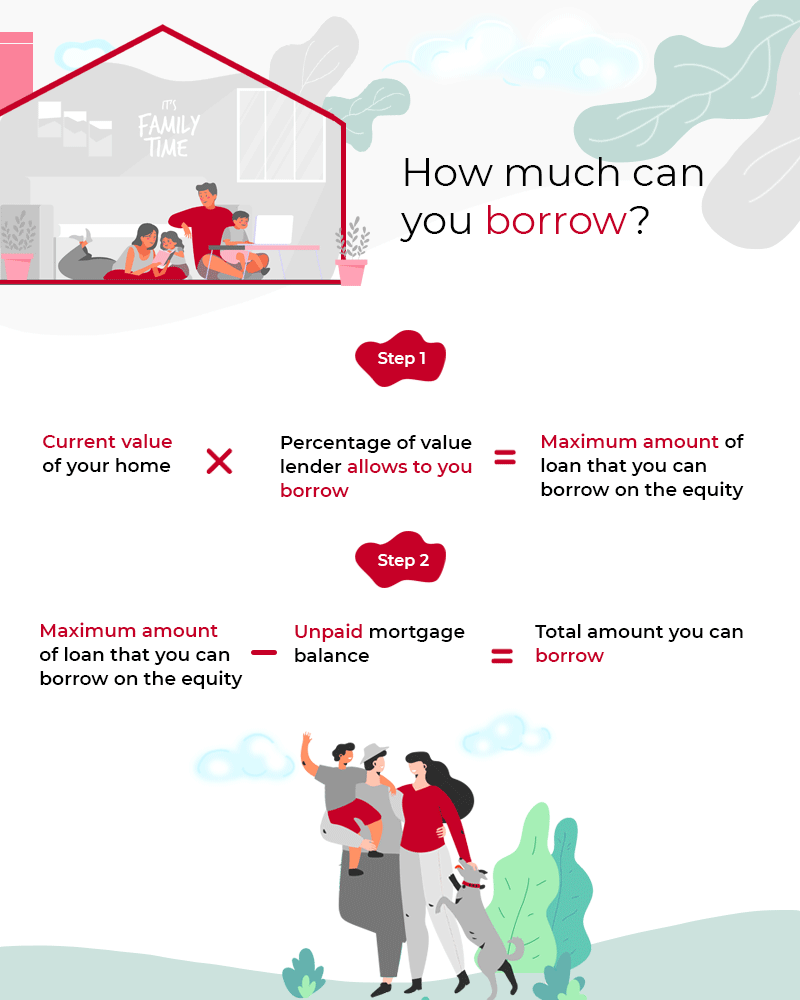
Information provided on Forbes Advisor is for educational purposes only. Your financial situation is unique and the products and services we review may not be right for your circumstances. We do not offer financial advice, advisory or brokerage services, nor do we recommend or advise individuals or to buy or sell particular stocks or securities. Performance information may have changed since the time of publication. You can generally borrow up to 80% or 85% of your home’s value with a home equity loan, depending on the lender and your financial profile. If you’re approved, you’ll receive a lump sum to use how you wish—for example, to cover large expenses like home improvements or unexpected medical bills.
The majority of financial lending institutions will require you to have a combined loan-to-value ratio of under 85%. In other words, the sum of all your current outstanding mortgage balances cannot represent more than 85% of your home’s total current value. For example, if you have a no-closing-cost home equity loan and you refinance it within 24 or 36 months, you may have to reimburse your current lender for the closing costs it paid on your behalf. These fees should be low enough to make refinancing worth it, however. Research is an important step in determining what type of home loan is right for you and your financial goals. A home equity loan, HELOC and cash-out refinance allow homeowners to borrow against their home for larger purchases.

Since they are secured loans, you can often get a more competitive rate with a home equity loan or HELOC than with, say, a personal loan. A HELOC is like a credit card that's tied to the equity in your home. With any type of refinancing, you should plan to continue living in your home for a year or more. It can be a good idea to do a rate-and-term refi if you can recoup your closing costs with a lower monthly interest rate within about 18 months.
If you plan to keep your loan for a long time, try to get the lowest possible rate. Ideally, you’ll get both low rates and fees, but there’s usually a trade-off. At the very least, shop for at least three home equity loans. A second mortgage is normally used to borrow against a home’s appreciated value or borrow principal that the homeowner previously paid off on the first mortgage. Keep in mind that the refinance is essentially another loan, or mortgage, that has a new timeline, which means it might take you longer to pay off.
Factor in the closing costs and other fees when you're trying to calculate how much money you'll save. Those fees might negate any monthly savings if you sell your house before at least reaching a break-even point. If you’re planning on tapping into your home’s equity, it’s key to have a strategy for how you’ll use and pay back the money you borrow. Many experts say there’s potential for a recession in 2023. So, you want to make sure you have room in your budget in case you face job or income loss. However, you shouldn't see your house as a good source of short-term capital.
Should I do a cash-out refinance to pay off my home equity loan?
Aylea Wilkins is an editor specializing in personal and home equity loans. She has previously worked for Bankrate editing content about auto, home and life insurance. Receipts of the payments you’ve made on your homeowners’ insurance policy, property taxes, and homeowners association fees are also required. If you have any existing debts like a mortgage, car loans, student loans, or credit card debts, you’ll have to disclose full details of each. The offers that appear on this site are from companies that compensate us. This compensation may impact how and where products appear on this site, including, for example, the order in which they may appear within the listing categories.

Our mission is to provide readers with accurate and unbiased information, and we have editorial standards in place to ensure that happens. Our editors and reporters thoroughly fact-check editorial content to ensure the information you’re reading is accurate. We maintain a firewall between our advertisers and our editorial team. Our editorial team does not receive direct compensation from our advertisers. A cash-out refinance is an alternative to a home equity loan.




No comments:
Post a Comment